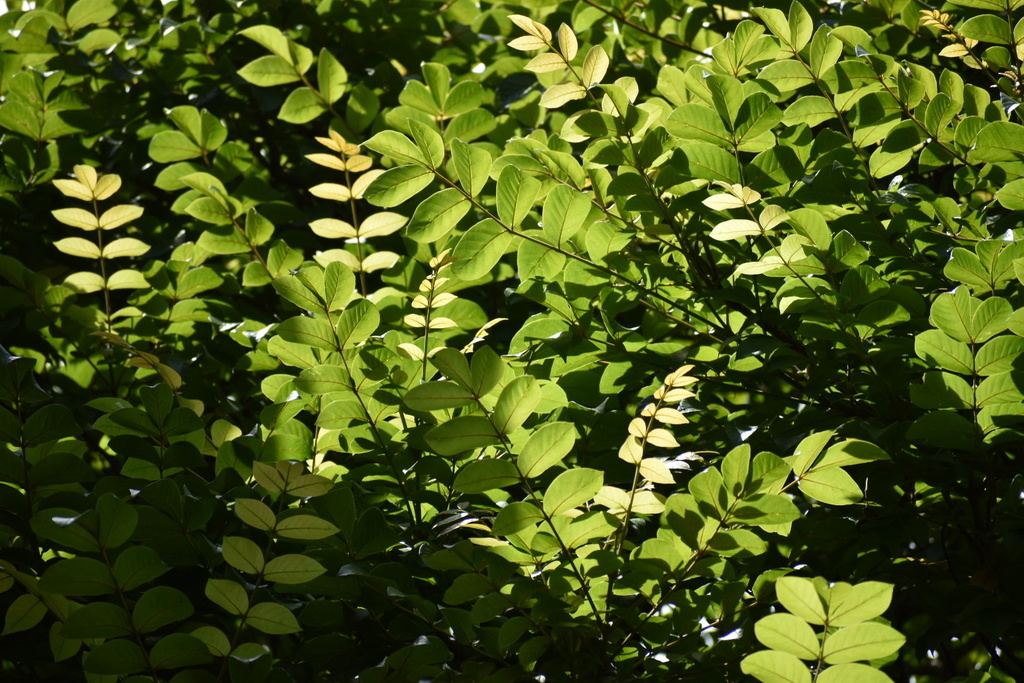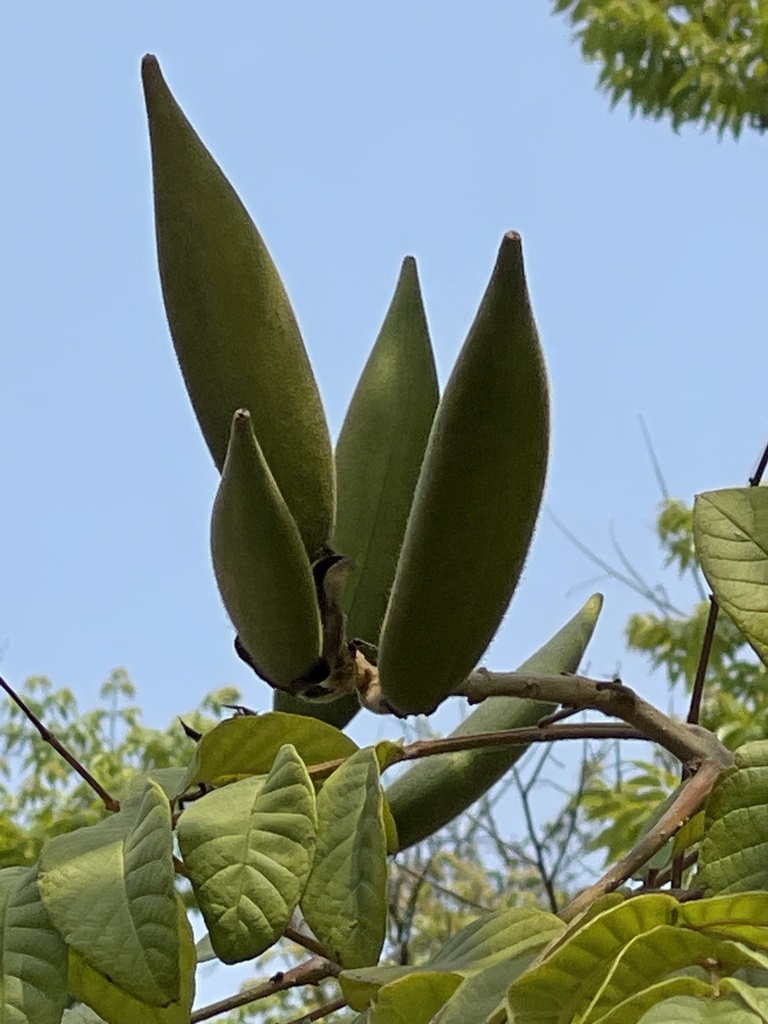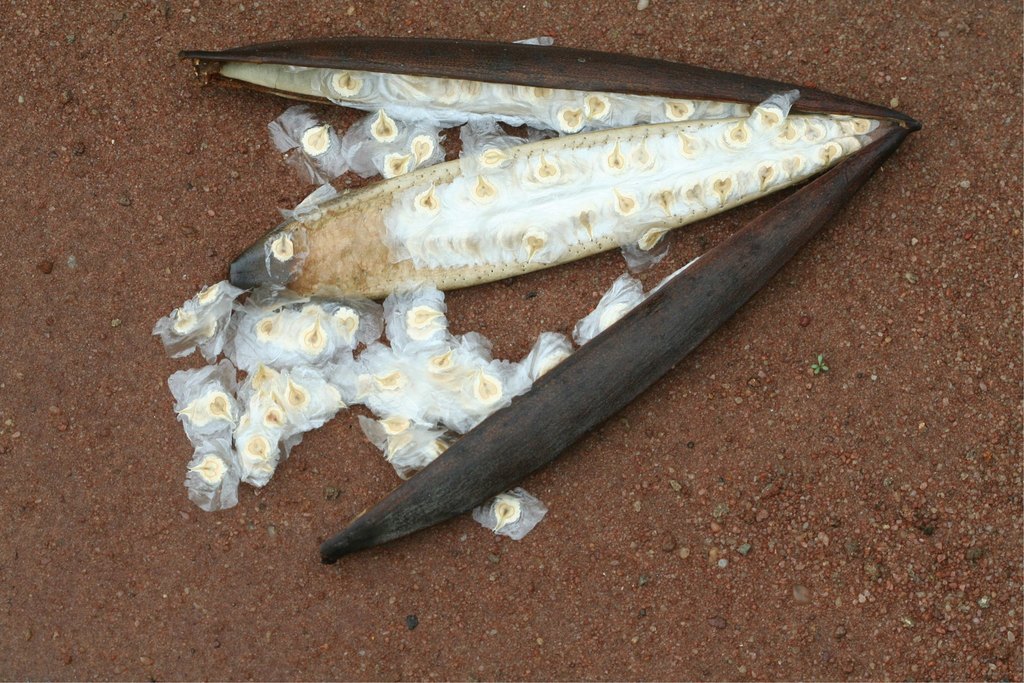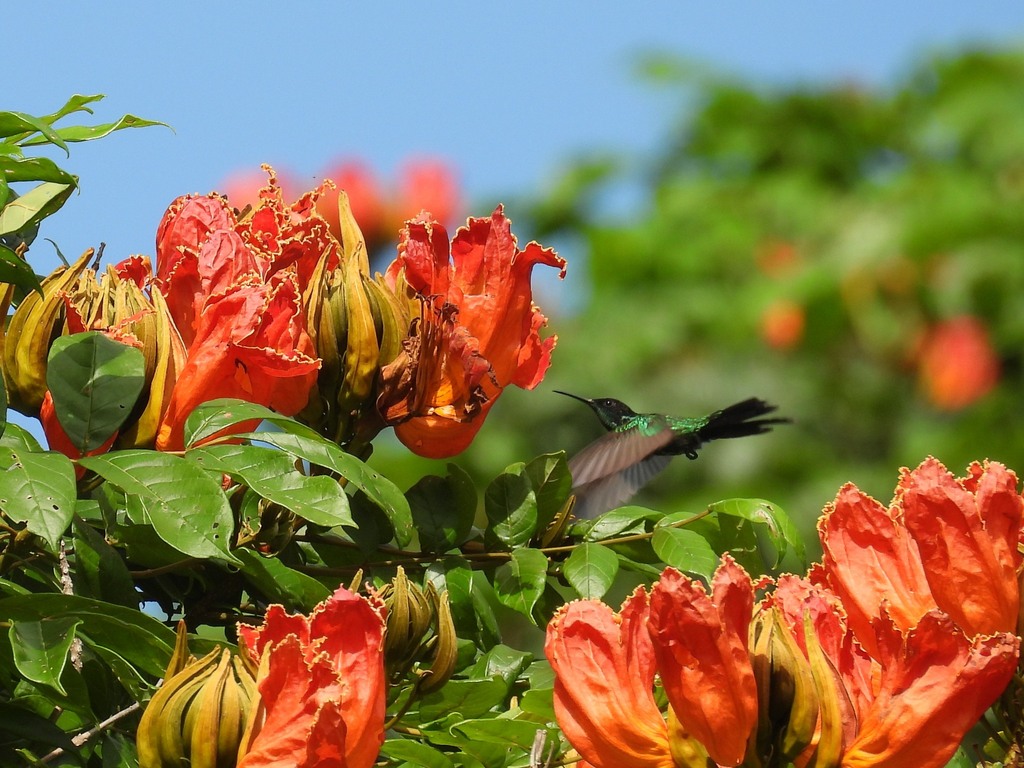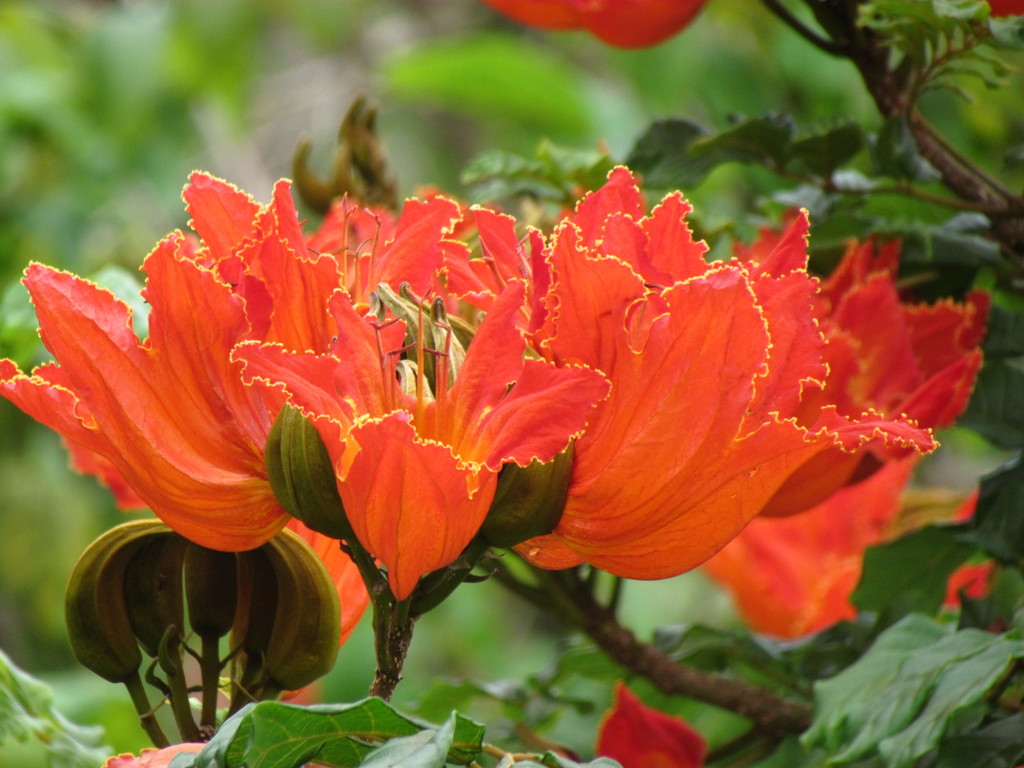
Spathodea campanulata
African tulip tree
Introduced and now reproducing on its own in the wild.
Spathodea is a monotypic genus in the flowering plant family Bignoniaceae. The single species it contains, Spathodea campanulata, is commonly known as the African tuliptree, fountain tree, pichkari or Nandi flame. The tree grows between 7–25 m (23–82 ft) tall and is native to tropical dry forests of Africa. It has been nominated as among 100 of the "World's Worst" invaders.
Read more on Wikipedia →This is an inference, not a schedule. The curve reflects when observers annotated flowering and fruiting — which tracks observer effort as well as plant behavior, and pools all elevations and islands into one signal. Hawaiʻi’s microclimates vary enormously; a species may fruit in January at sea level and June at elevation. Use this to know when to look, then look.
Controlling Spathodea campanulata
Best reported: Cut stump with 100% Round up Concentrate Plus (18% glyphosate) — one report from TNC Kauai.
5.0Cut stump100% Round up Concentrate Plus (18% glyphosate)GlyphosateG9
- 5successful. Recommended method · TNC Kauai · observed · 2021-04-22
Works fine in yards to skill stumps. I have never seen a stump resprout. However, the cut tree trunk needs to be removed or may take root.
5.0clip and drip20% G4, 80% BiodieselTriclopyrG4
- 5successful. Recommended method · OANRP · observed
Only for small trees. Not effective on big trees.
3.0IPA-Incision Point Application100% PolarisImazapyrG2
- 3moderate satisfaction · CTAHR/OANRP · trial · 2018-04-24
Trial complete, 37 months. 6 cuts/tree, 0.5ml/cut. At 18 months, 3 of 5 trees dead, but at 37 months, found some recovery on 2 of them. At 37 months. 2 trees dead, 2 previously thought dead but with resprouts. Treament most effective at circum <160cm. Largest tree (225 cm circum) recovered. Suggest 1 cut/ 20cm.
3.0cut-stump20% G4, 80% BiodieselTriclopyrG4
- 3moderate satisfaction · OANRP · observed
2.0IPA-Incision Point Application100% MilestoneAminopyralidG4
- 2minimal satisfaction · CTAHR/OANRP · trial · 2018-04-23
Trial complete, 37 months. 6 cuts/tree, 0.5ml/cut. At 18 months, appeared that 1 of 5 trees died, but at 37 months, it resprouted; do not know if it fully recovered. At 37 months, remaining trees recovering.
2.0girdle20% G4, 80% BiodieselTriclopyrG4
- 2minimal satisfaction · OANRP · observed
resprouts
1.0IPA-Incision Point Application100% Ranger ProGlyphosateG9
- 1unsatisfactory results · CTAHR/OANRP · trial · 2018-04-23
Trial complete, 37 months. 6 cuts/tree, 0.5ml/cut. No trees died. Some defoliation seen, but no results inconsistent. Not recommended.
1.0IPA-Incision Point Application100% Garlon 4 UltraTriclopyrG4
- 1unsatisfactory results · CTAHR/OANRP · trial · 2018-04-23
Trial complete, 37 months. 6 cuts/tree, 0.5ml/cut. Some defoliation seen at 18 months, but all 5 trees recovered by 37 months. Not recommended.
1.0IPA-Incision Point ApplicationMilestoneAminopyralidG4
- 1unsatisfactory results · NEPM
large trees
Ratings are the reporting organisation’s own, on a 5-point scale. Always follow the product label — the label is the law. See these 9 rows in the full table