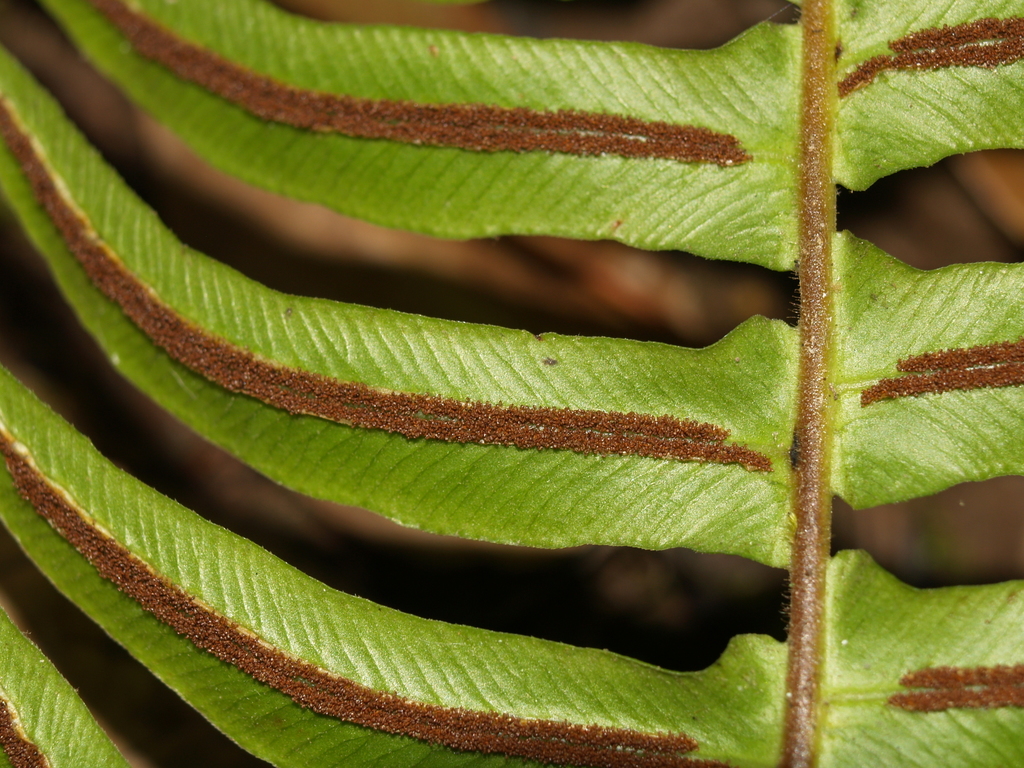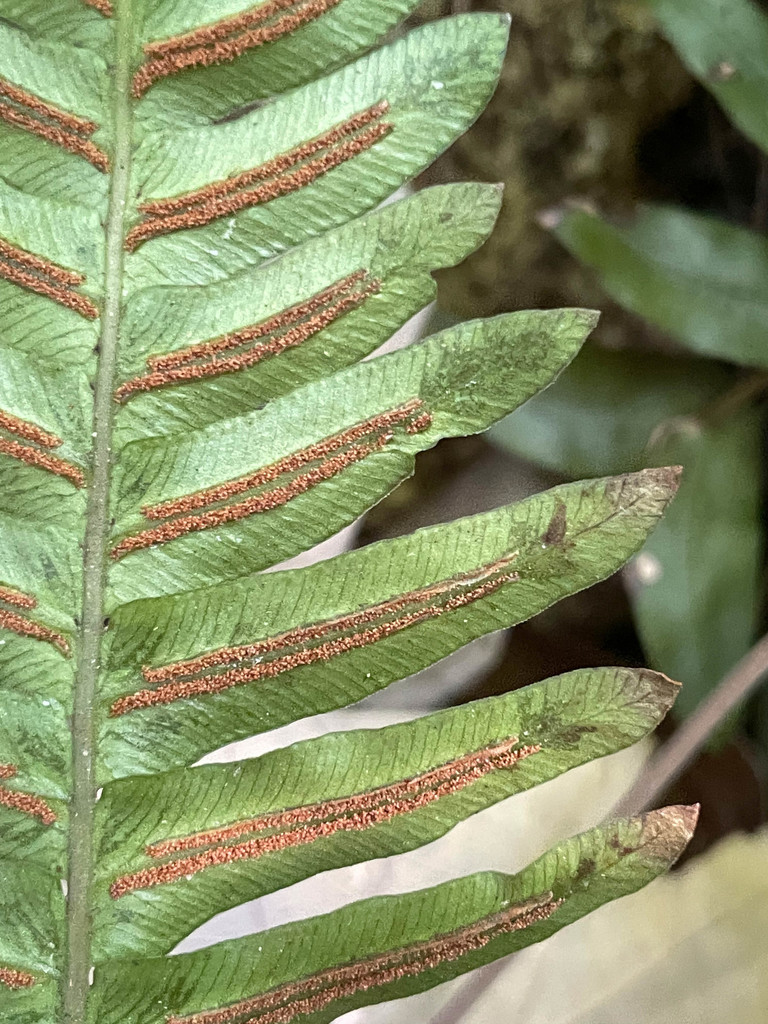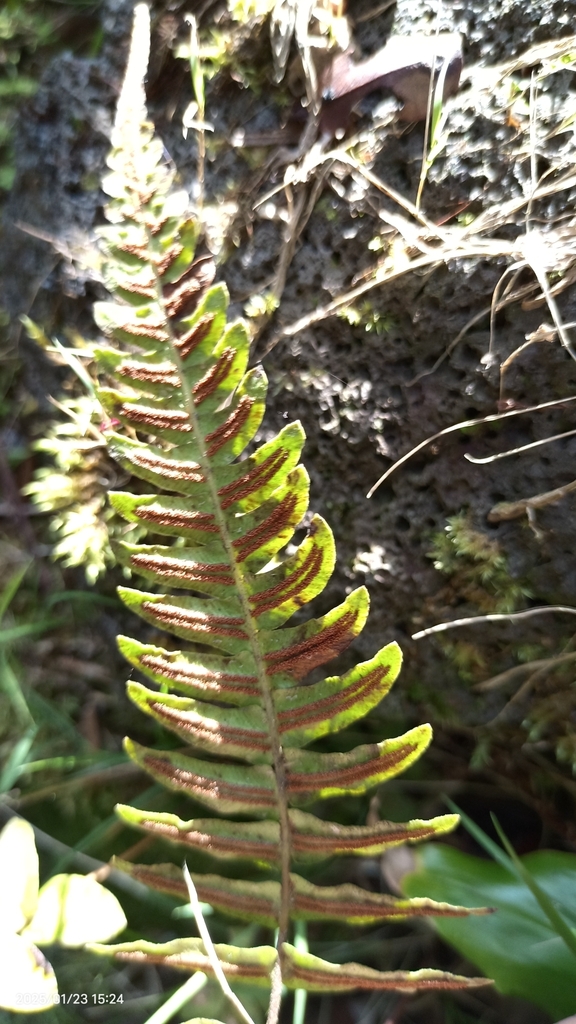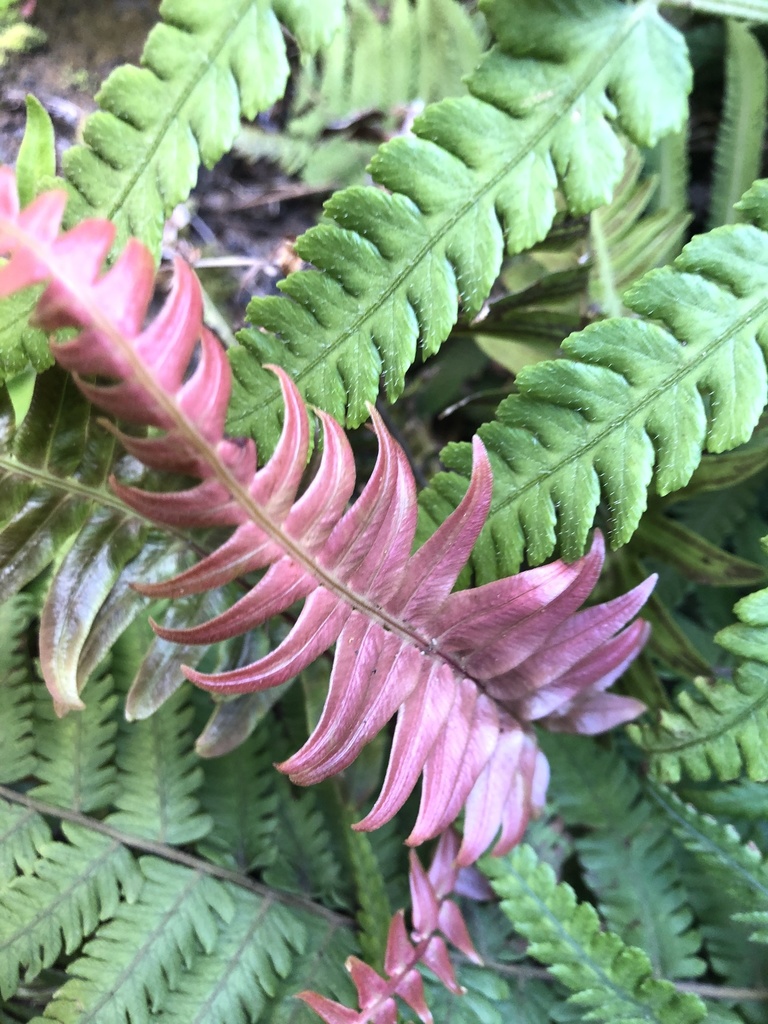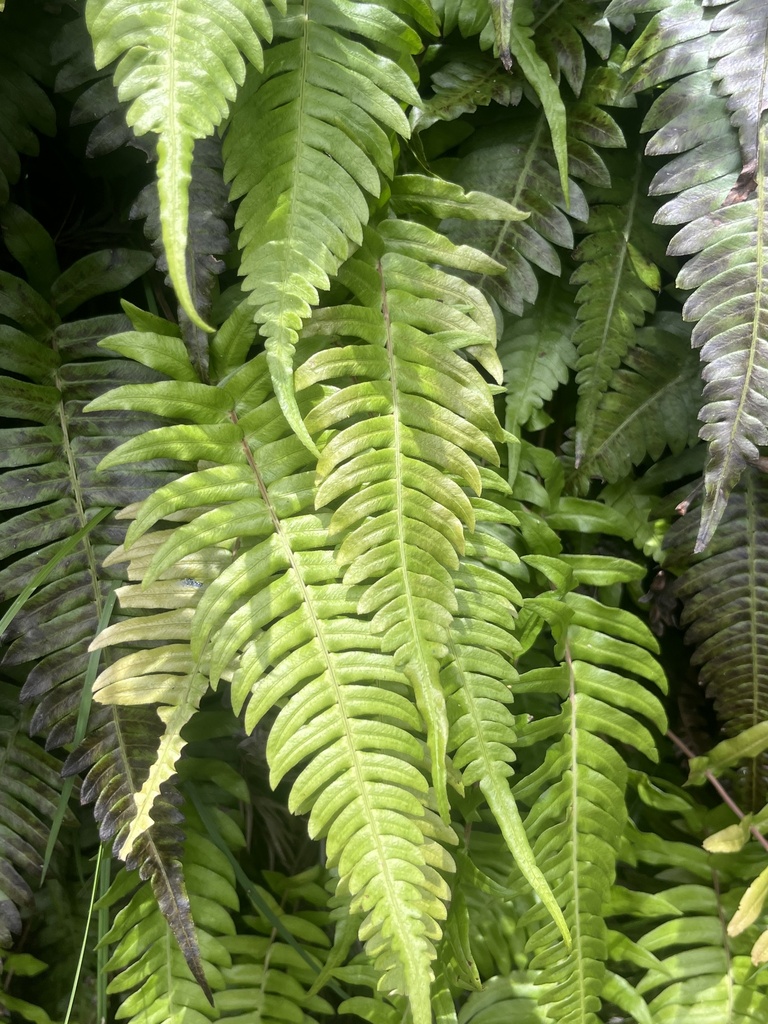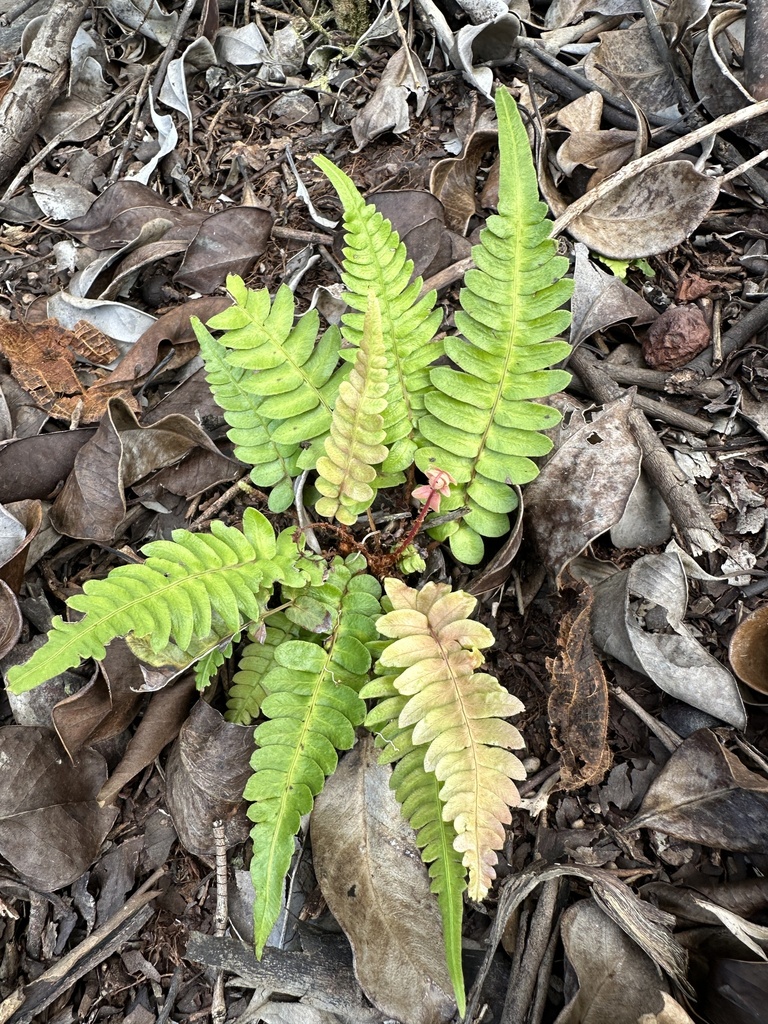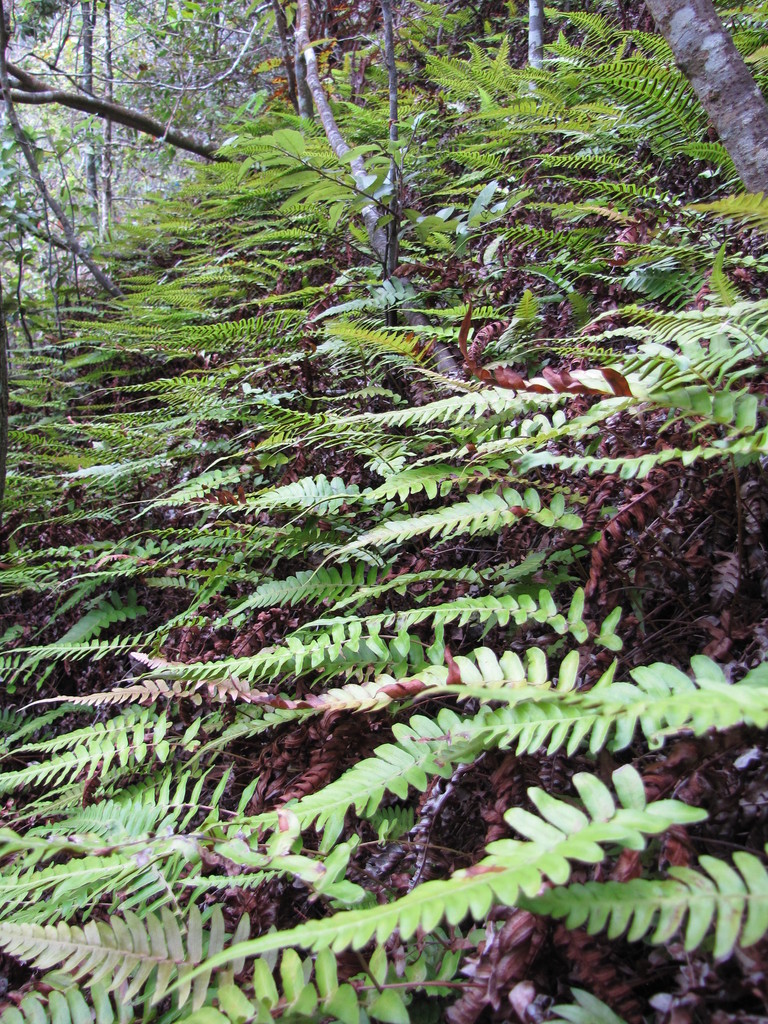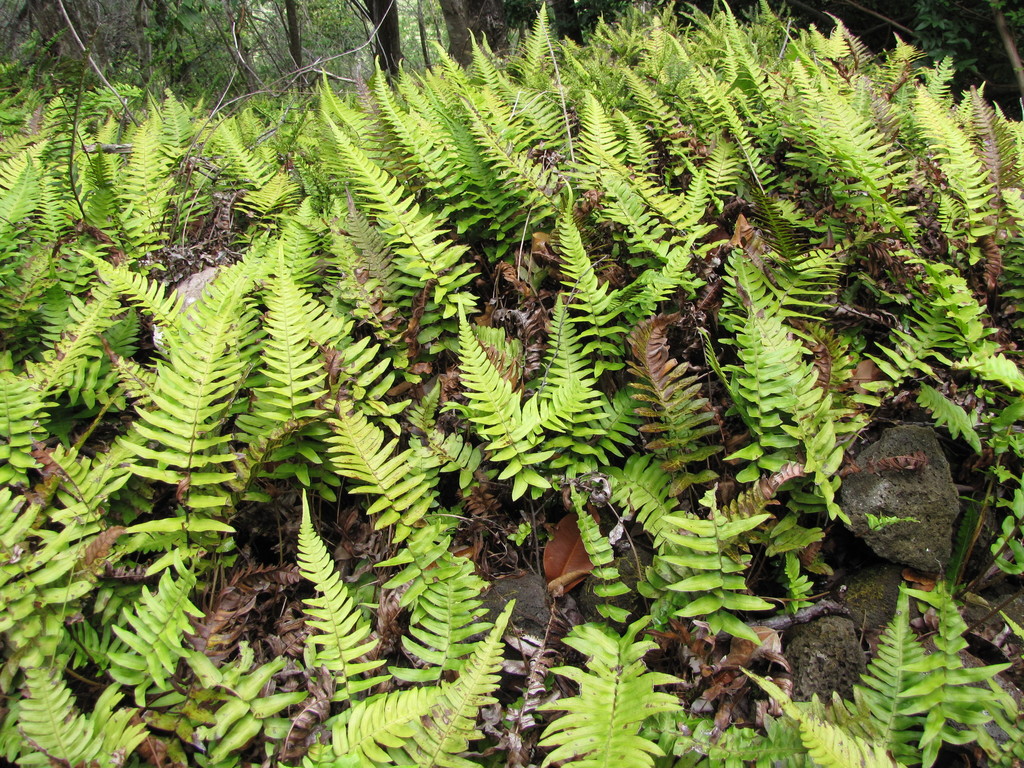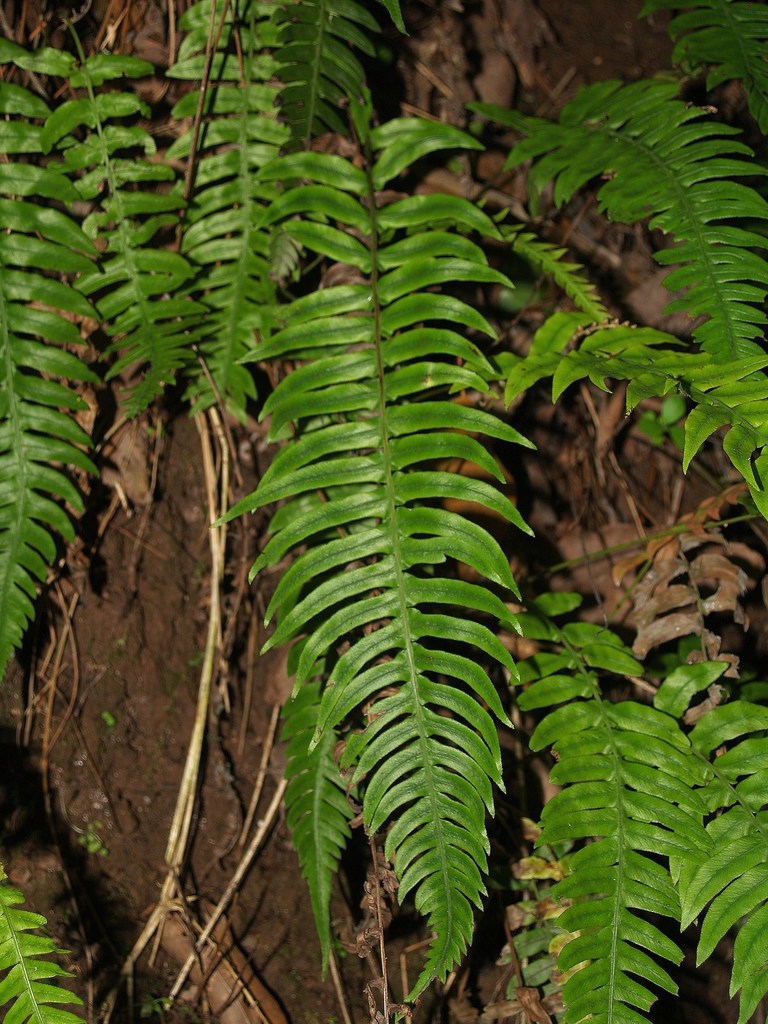
Blechnum appendiculatum
palm fern
Introduced and now reproducing on its own in the wild.
Blechnum (hard fern) is a genus of between 150–220 species of ferns with a cosmopolitan distribution, in the family Blechnaceae in the eupolypods II clade of the order Polypodiales. By far the greatest species diversity is in tropical regions of the Southern Hemisphere, with only a few species reaching cool temperate latitudes in the Southern Hemisphere (notably B. penna-marina, south to Cape Horn, Chile, the southernmost fern in the world) and Northern Hemisphere (notably B. spicant,...
Read more on Wikipedia →Only 0 phenology-annotated observations exist for this species in Hawaiʻi — too few to describe a season. No window is inferred.
Controlling Blechnum appendiculatum
Best reported: foliar with 5% Polaris, 95% water — one report from NEPM.
5.0foliar5% Polaris, 95% waterImazapyrG2
- 5successful. Recommended method · NEPM · trial · 2015-02-26
need to look into trying a lower dosage - also spiked with milestone (1%) had similar results although milestone spike plot seemed to kill outside of the treated plot
4.0foliarGarlon 4 (10% dilution in crop oil)TriclopyrG4
- 4more than moderate satisfaction · OANRP · trial · 2018-03-21
Trial with replicates and control plots conducted. 148ml spray mix applied to 1 sq. m BleApp. Plots were monitored for 13 months post-tx. Vegetative cover estimated at 1, 2, 6 and 13 months. Results: Co-occuring plants in the plot generally died under all treatments. Size of BleApp patch did not have effect on efficacy of treatment. For G4, vegetative cover dropped to 0 after 1 month and stayed low, with slight recovery seen at 13 months. No translocation outside plots seen.
4.0foliarRanger Pro (2% dilution in water)GlyphosateG9
- 4more than moderate satisfaction · OANRP · trial · 2018-03-21
Trial with replicates and control plots conducted. 148ml spray mix applied to 1 sq. m BleApp. Plots were monitored for 13 months post-tx. Vegetative cover estimated at 1, 2, 6 and 13 months. Results: Co-occuring plants in the plot generally died under all treatments. Size of BleApp patch did not have effect on efficacy of treatment. Results: Cover dropped to 0 after one month and stayed low for the entire monitoring period. No translocation outside plots seen.
4.0foliarPolaris (2% dilution in water)ImazapyrG2
- 4more than moderate satisfaction · OANRP · trial · 2018-03-21
Trial with replicates and control plots conducted. 148ml spray mix applied to 1 sq. m BleApp. Plots were monitored for 13 months post-tx. Vegetative cover estimated at 1, 2, 6 and 13 months. Results: Co-occuring plants in the plot generally died under all treatments. Size of BleApp patch did not have effect on efficacy of treatment. Results: Vegetative cover steadily declined over the entire 13 months, eventually reaching 0 cover. Slow action. Some translocation seen outside plot (up to 40cm)
3.0foliar5% G4, 95% waterTriclopyrG4
- 3moderate satisfaction · OANRP · trial
Dig a trench around the fern patch first (1-2m x 1-2m). This was highly effective, with complete death, and slow-recolonization by any plants. The trench cut through rhizomes, effectively creating a single plant out of a very large clonal mass. Spraying without trenching is most effective if small, isolated patches are sprayed, or if quite large areas are sprayed. Lots of potential non-target effect, as it is almost impossible to avoid spraying any other plants in a large mat of Blechnum.
3.0foliar3% Polaris, 97% waterImazapyrG2
- 3moderate satisfaction · NEPM · observed · 2016-10-31
Didn't completely kill, but did reduce population size, may not have been good coverage
3.0clip and drip20% G4, 80% BiodieselTriclopyrG4
- 3moderate satisfaction · OANRP · observed
clip individual rosettes and drip onto meristem. Most effective on small patches of Blechnum. Very time-consuming. Relatively safe to use around native plants/rare plants. We have some plots and photopoints installed to look at regrowth and non-target impact of this method.
3.0hand-pull
- 3moderate satisfaction · OANRP · observed
Very slow, disturbs soil a lot, which can be a concern in native forest areas, particularly in gulches or on shallow soils over rock.
Ratings are the reporting organisation’s own, on a 5-point scale. Always follow the product label — the label is the law. See these 8 rows in the full table